Enterprise Workflow Automation
Any AI Agent Can Develop
Backed by a durable execution framework for building unbreakable, cloud‑native distributed systems in effortless, uninterrupted agentic loops.
On workflow failure, code can be updated and restarted. Previously completed steps will recover in parallel and the execution will resume instantly as if nothing happened. This enables building workflows using massive, real-world datasets in an uninterrupted development loop. Equivalent to journal-based replay, but performance bottlenecks are bypassed through a distributed storage architecture.
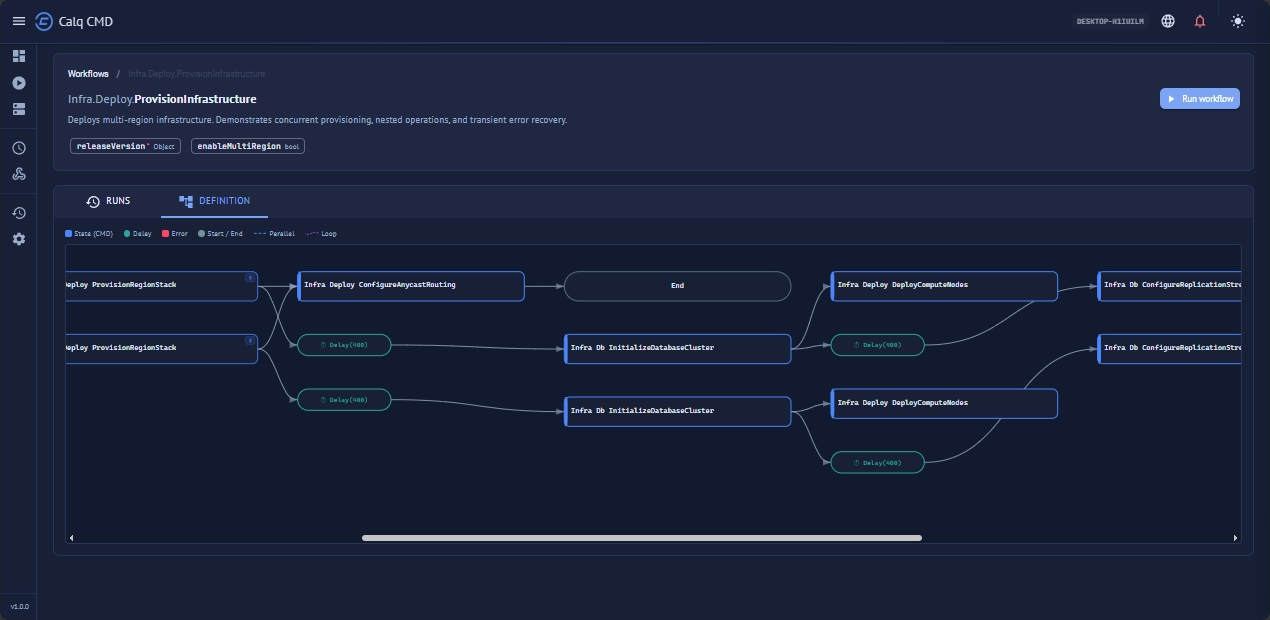
No special rules or specialized infrastructure. AI can build any workflow effortlessly and the progress can be verified through auto-generated diagrams that visualize how workflows are defined and how they run.
Workflows can be written in multiple languages at once — such as Python, Java, JavaScript, and Bash. No glue infrastructure, message brokers, or service boundaries between languages.
Business logic remains plain code — free of special rules, restricted APIs, separate orchestration layers, or new paradigms. Systems requiring strict safety can leverage standard static analysis tools to guarantee higher safety standards than systems relying solely on determinism validation at runtime. Anyone and any AI can use it immediately.
A single workflow can span millions of parallel branches and run for months without limitations. No event history caps. No forced workarounds at scale. The platform operates as HTTP server middleware and can leverage any standard traffic management technology.
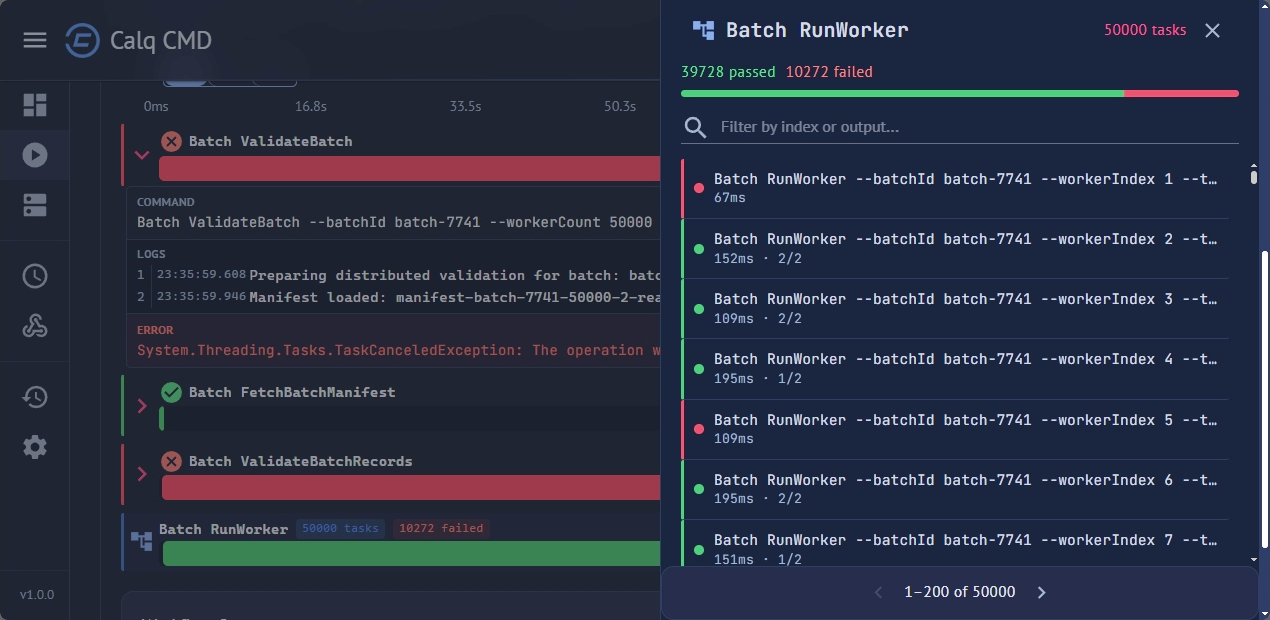
Cloud-native architecture that unifies everything into a single application compatible with any infrastructure. No dedicated cluster, sidecar, or daemon. No new operational burdens. Can run anywhere — serverless or on-premises, and Calq Relay can deploy it to Kubernetes with ease.

Can be used to build standalone applications. Such applications can be transformed into CLI tools via Calq CLI and deployed as GitHub Actions using Calq Flow. On Github, there's no need for Redis or extra setup.
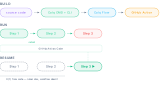


Workflow definitions can be browsed even before workflows run. Timeline and flow diagrams show real-time logs per step. This way, workflows can be fully understood without looking at the code.
High-performance AI systems that execute without repeating expensive model calls.
Approval chains, onboarding flows, and multi-step operations with human checkpoints.
Processes that can survive crashes and run for months without hitting limits or requiring workarounds.
Multi-step operations that can be trusted to recover from failures and complete successfully.
Complex pipelines without complexity burden.
Workloads that process millions of parallel jobs and effortlessly resume on mid-execution failures.
Get in touch with our team for technical support, licensing questions, or partnership opportunities.
or reach Greg Chuchro directly on LinkedIn